Partnerships

There’s still time to set up a SEP and reduce your 2025 taxes

If you own a business or are self-employed and haven’t already set up a tax-advantaged retirement plan, consider establishing one before you file your 2025 tax return. If you choose a Simplified Employee Pension (SEP), you’ll be able make deductible 2025 contributions to it, saving you taxes. Not only is the SEP deadline favorable, but […]

There’s still time to set up a SEP and reduce your 2025 taxes Read More »

Tax filing update for pass-through entities

Do you operate a business as a partnership, a limited liability company (LLC) treated as a partnership for tax purposes or an S corporation? In tax lingo, these are called “pass-through” entities because their taxable income items, tax deductions and tax credits are passed through to their owners and taken into account on the owners’ federal

Tax filing update for pass-through entities Read More »

New law eases the limitation on business interest expense deductions for 2025 and beyond

Interest paid or accrued by a business is generally deductible for federal tax purposes. But limitations apply. Now some changes under the One Big Beautiful Bill Act (OBBBA) will result in larger deductions for affected taxpayers. Limitation basics The deduction for business interest expense for a particular tax year is generally limited to 30% of

New law eases the limitation on business interest expense deductions for 2025 and beyond Read More »

Run a business with your spouse? You may encounter unique tax issues

Do you and your spouse together operate a profitable unincorporated small business? If so, you face some challenging tax issues. The partnership issue An unincorporated business with your spouse is classified as a partnership for federal income tax purposes, unless you can avoid that treatment. Otherwise, you must file an annual partnership return using Form 1065.

Run a business with your spouse? You may encounter unique tax issues Read More »

Lower your self-employment tax bill by switching to an S corporation

If you own an unincorporated small business, you may be frustrated with high self-employment (SE) tax bills. One way to lower your SE tax liability is to convert your business to an S corporation. SE tax basics Sole proprietorship income, as well as partnership income that flows through to partners (except certain limited partners), is subject

Lower your self-employment tax bill by switching to an S corporation Read More »

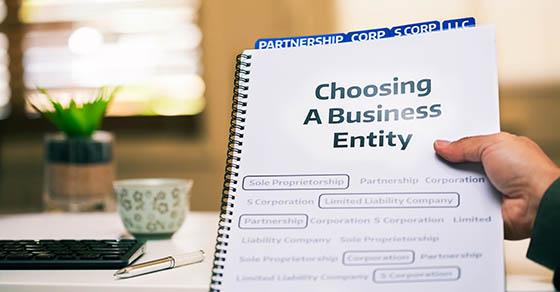
A tax guide to choosing the right business entity

One of the most critical decisions entrepreneurs make when starting or restructuring a business is choosing the right entity type. This choice directly impacts how the business is taxed, the level of administrative complexity and regulatory compliance obligations. While legal liability considerations also matter, we will focus on tax implications. For liability advice, consult a

A tax guide to choosing the right business entity Read More »

The QBI deduction and what’s new in the One, Big, Beautiful Bill Act

The qualified business income (QBI) deduction, which became effective in 2018, is a significant tax benefit for many business owners. It allows eligible taxpayers to deduct up to 20% of QBI, not to exceed 20% of taxable income. It can also be claimed for up to 20% of income from qualified real estate investment trust

The QBI deduction and what’s new in the One, Big, Beautiful Bill Act Read More »

Do you have an excess business loss?

If an individual taxpayer has substantial business losses, unfavorable federal income tax rules can potentially come into play. Here’s what you need to know as you assess your 2024 tax situation. Disallowance rule The tax rules can get complicated if your business or rental activity throws off a tax loss — and many do during

Do you have an excess business loss? Read More »

Navigating tax complexities: Craft partnership agreements and LLC operating agreements with precision

Partnerships are often used for business and investment activities. So are multi-member LLCs that are treated as partnerships for tax purposes. A major reason is that these entities offer federal income tax advantages, the most important of which is pass-through taxation. They also must follow some special and sometimes complicated federal income tax rules. Governing

Navigating tax complexities: Craft partnership agreements and LLC operating agreements with precision Read More »

The possible tax landscape for businesses in the future

Get ready: The upcoming presidential and congressional elections may significantly alter the tax landscape for businesses in the United States. The reason has to do with a tax law that’s scheduled to expire in about 17 months and how politicians in Washington would like to handle it. How we got here The Tax Cuts and

The possible tax landscape for businesses in the future Read More »